

Last updated: October 2026. Rules, deadlines and fee schedules change often, so treat the dates below as a starting point and confirm them with the state agency that administers your program.
Extended producer responsibility laws for packaging require companies that place packaged goods on a covered state’s market to take financial and operational responsibility for the end-of-life collection, sorting, recycling and disposal of that packaging. Seven U.S. states have enacted packaging EPR laws so far, and the first fee assessments have already gone out.
What changes for most teams is who pays. Municipal recycling programs used to be funded mostly out of city budgets, so households covered the cost through taxes and ratepayers. EPR turns that around: the brand, importer or private-label retailer that first puts a package into the state’s stream of commerce picks up the bill, based on how much packaging it sells and how recyclable that packaging is.
That is a big enough shift that it changes how packaging gets designed, sourced and priced. Below is a plain-English walkthrough of the rules, the states, the costs and a practical order of operations for year one.
Key takeaways
- Seven states have enacted packaging EPR laws: Maine, Oregon, Colorado, California, Minnesota, Washington and Maryland.
- Coverage follows the entity that places packaging into the state’s stream of commerce, no matter where the company is headquartered.
- Compliance runs on three steps: register, report packaging by material and weight, then pay an annual fee set by a producer responsibility organization.
- Fee rates are eco-modulated, so lighter and more recyclable packaging costs less per pound.
- Courts have not invalidated any of these laws, and relief granted so far has been narrow, so the safe move is to keep complying.
Table of Contents
- What Are Extended Producer Responsibility Laws for Packaging?
- How Do Packaging EPR Programs Work?
- What Responsibilities Do Packaging Producers Have?
- Which U.S. States Have Packaging EPR Laws?
- How Much Do Packaging EPR Compliance Costs Increase?
- How Should Manufacturers Prepare for Packaging EPR Compliance?
- What Mistakes Create the Biggest Compliance Risks?
- Frequently Asked Questions
- Do packaging EPR laws apply to manufacturers or only brands?
- Which packaging formats are covered by U.S. EPR laws?
- What is a producer responsibility organization for packaging?
- How are packaging EPR fees calculated?
- Does packaging EPR mean producers pay for municipal recycling?
- Can small manufacturers be exempt from packaging EPR?
- Conclusion
What Are Extended Producer Responsibility Laws for Packaging?
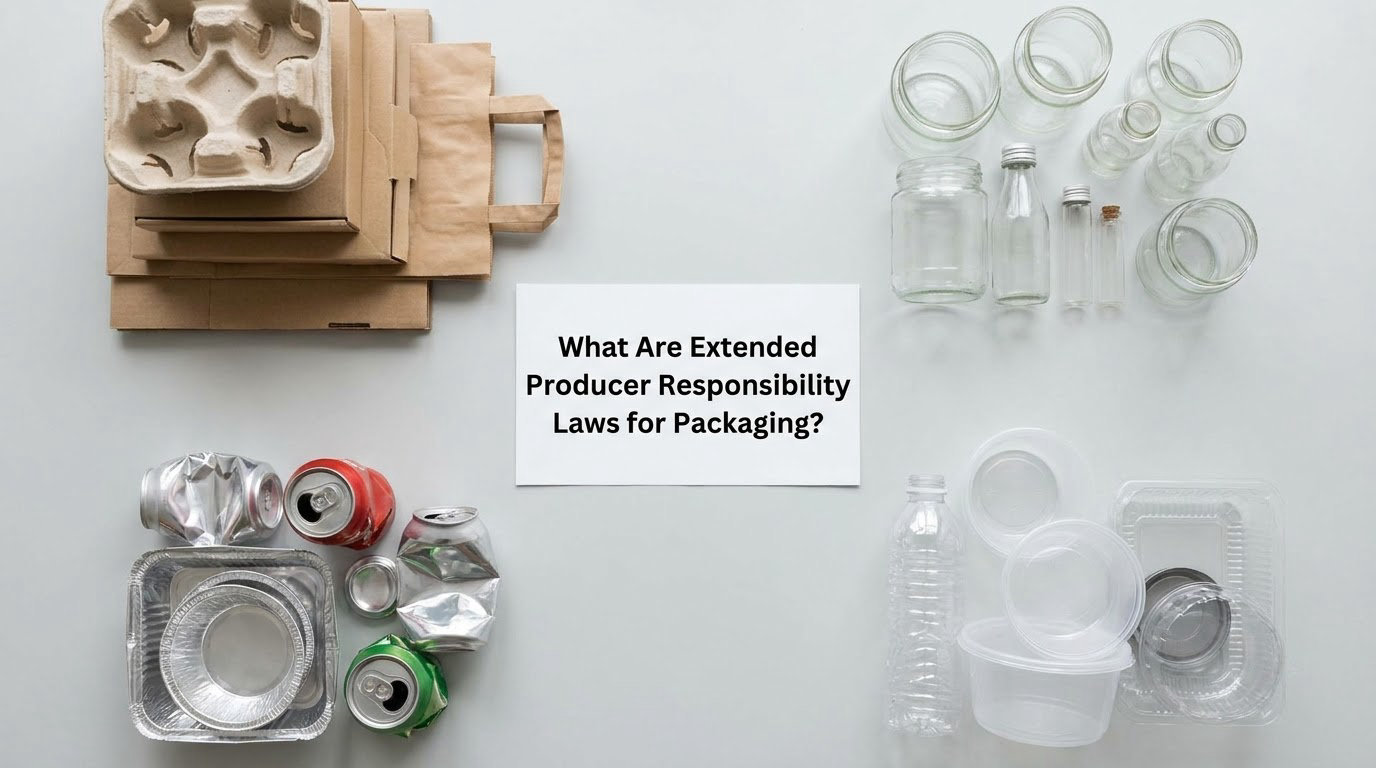
An EPR law makes the producer financially responsible for a product’s packaging after the consumer is done with it. For packaging, that covers collection, sorting, recycling and disposal, including the cost of running municipal programs that handle those materials.
The idea is straightforward: the company that decides what goes in a package and puts that package on the market should carry the cost of taking it back. Governments adopted it because municipal recycling budgets were stretched, recycling rates were flat and local ratepayers were absorbing the gap.
Four mechanics show up in every state program, and they are worth memorizing because they come up constantly:
- Shift in the burden. Municipalities no longer absorb unrecovered end-of-life costs. Producers fund collection, sorting and processing, plus a share of disposal for material that never gets recycled.
- Producer responsibility organizations (PROs). In most states, producers join a non-profit or producer-run organization that collects fees, contracts with recyclers and reimburses communities. Circular Action Alliance operates in several of these states, and the Sustainable Packaging Coalition runs an EPR portal with cross-state program detail.
- Eco-modulation. Fee schedules are not one flat rate per pound. Rates rise for material that is hard to recycle and fall for material that is easy, so packaging design changes the invoice.
- Data reporting. Producers report the type, weight and characteristics of covered packaging by state, which is the data most companies find hardest to produce.
What EPR does not do is ban a material, set a national recycling mandate, or replace state labeling laws. It is a funding and reporting framework, and it works differently in each state that has enacted it.
How Do Packaging EPR Programs Work?
Each program spreads responsibility across a chain of parties, and understanding who does what makes the obligations much less abstract.
- Producers register, report, pay and support recovery of their packaging.
- Producer responsibility organizations pool producer money, set and collect fees, run contracts, and reimburse municipalities for verified collection and processing costs.
- State agencies write the rules, approve the program plan, set recycling and reuse targets, verify performance and enforce penalties.
- Municipalities run collection for consumers and submit cost claims to the PRO for reimbursement.
- Recyclers and reprocessors take the sorted material and report what they actually processed.
- Consumers and retailers sort and return material; retailers also have their own registration and reporting duties in some states.
From a producer’s side, the mechanics reduce to three steps.
- Register. The company enrolls with the state agency or the designated PRO, which assigns an account, a membership tier and a reporting schedule.
- Report. Each reporting period, the producer submits the weight of covered packaging it sold into the state, broken out by material type and substrate, along with characteristics the program uses to score recyclability.
- Pay. The PRO applies the eco-modulated rate schedule to that reported weight and issues an assessment. Producers are then measured against the state’s recycling and reuse targets.
Municipal reimbursement is the mechanism that keeps the system honest. Communities submit what collection, sorting and processing actually cost them, and the PRO reimburses those costs out of producer fees, verified against recycling rates and cost-effectiveness rules. If a program falls short of its targets, the state’s share of the bill grows and producer fees rise with it.
What Responsibilities Do Packaging Producers Have?
Duties break down into a handful of workstreams, and most teams discover they already own part of each one without labeling it EPR.
- Coverage assessment. Work out whether the entity is a covered producer in each state, based on revenue or packaging volume thresholds and on who first places the packaging into the state.
- PRO membership. Join the designated organization in every state where you are covered, on the schedule that state requires.
- Data reporting. Produce packaging weight by material type and substrate, plus attributes the program scores.
- Fee payment. Pay assessments on time and reconcile them against what you reported.
- Brand and label support. Provide on-pack disposal instructions, QR codes or digital locator information where the state requires it, and fund the label changes needed to comply.
- Recordkeeping. Keep registrations, reports, invoices and design specifications for the retention period the state sets, because fee disputes often surface years later.
- Corrective action. Fix reported errors, respond to agency or PRO notices, and use the administrative appeal process where a dispute is allowed.
How these duties split across the supply chain
The obligation attaches to whoever first sells the packaged product into the state, and supply chains rarely line up neatly with contracts. Four archetypes show up repeatedly.
- Manufacturers are covered when they put their own branded product on the state market, and often again when they sell a private-label product to a retailer.
- Brand owners are covered even when every physical step of production, importing and fulfillment is outsourced. Owning the brand and controlling packaging design is what triggers the duty.
- Importers are covered when they are the first party placing packaging into the state’s stream of commerce, which is the classic trap for companies sourcing overseas and selling through marketplaces.
- Private-label retailers are covered in several states because they decide the packaging and place the goods on the market under their own label.
Distributors and contract packagers generally are not the producer, but their data and cooperation are what make reporting possible. The mismatch between an original equipment manufacturer agreement, a private-label arrangement and the legal definition of a producer is where most compliance mistakes begin.
Which U.S. States Have Packaging EPR Laws?
As of October 2026, seven states have enacted packaging EPR statutes. Each one has its own official name, its own definition of a covered producer, its own thresholds and its own schedule, so no single national checklist will get a multi-state seller across the line. Here is where each program stands.
| State | Official law name | Enacted | Status and next hard deadline |
|---|---|---|---|
| Maine | An Act to Support and Improve Municipal Recycling Programs | 2021 | Program in operation; reporting and fee cycles ongoing, with targets increasing in later program years |
| Oregon | Oregon Plastic Pollution and Recycling Modernization Act | 2021 | Producer organization and fee assessments live; first state to issue fee assessments to registered producers |
| Colorado | Producer Responsibility Program for Statewide Recycling Act | 2022 | Producer responsibility organization operational from July 1, 2025; reporting and reconciliation cycles continue |
| California | SB 54, Plastic Pollution Prevention and Packaging Producer Responsibility Act | 2022 | CalRecycle rules issued in 2026; producers must meet applicable requirements before the January 1, 2027 sales restriction |
| Minnesota | Packaging Waste and Cost Reduction Act | 2024 | Registration and planning phases underway; full producer obligations begin January 1, 2029 |
| Washington | Recycling Reform Act | 2024 | Rulemaking under way; core producer obligations begin January 1, 2030 |
| Maryland | Environment – Packaging Producer Responsibility Plans | 2025 | Newest program; rulemaking and program design in progress ahead of later deadlines |
Penalties are where non-compliance gets expensive fast. Most statutes allow civil penalties assessed per day per violation, and several states add the ability to bar a producer from selling into the state until it comes into compliance, which is a far bigger threat to a business than a fine.
| State | Maximum civil penalty per violation | Sales restriction |
|---|---|---|
| California | Up to 50,000 USD per day | Producers of covered packaging may not be sold in the state from January 1, 2027 without meeting SB 54 requirements |
| Oregon | Up to 25,000 USD per day | State may restrict sales for non-compliant producers |
| Minnesota | Up to 25,000 USD per day | Sales restriction authority applies alongside full obligations from January 1, 2029 |
| Maryland | Up to 20,000 USD | Corrective action and enforcement provisions apply as rules are finalized |
Read the table as direction of travel, not a guarantee of a penalty amount. Civil penalties are usually reserved for willful or repeated violations, and enforcement so far has been lenient. Agencies and PROs have generally forgiven late registration and late reports in the first cycle, and industry expectation is that a penalty action will eventually set an example.
One more layer sits alongside EPR and catches people out. California SB 343 and similar state labeling laws govern what claims and recycling symbols may appear on packaging, and they are separate obligations with separate timelines. Batteries, electronics, paint, textiles, mattresses and pharmaceuticals each run their own EPR-style programs too.
What Is the Difference Between Packaging EPR and Other Environmental Laws?
Extended producer responsibility laws for packaging sit alongside several other rules that touch the same package, and confusing them leads to wasted money and missed deadlines. The distinctions that matter most are below.
| Rule type | What it does | How it differs from packaging EPR |
|---|---|---|
| Packaging EPR | Makes producers fund collection, sorting, recycling and disposal of covered packaging | Funding and reporting framework; sets no national material ban and no single national rate |
| Recycling mandates | Require municipalities or processors to meet specific recycling or diversion rates | Sets an outcome for the system rather than a bill for the producer; often the target EPR programs are measured against |
| Recycled-content rules | Require a minimum percentage of post-consumer recycled content in packaging | Sets a composition standard for the material; EPR modulates fees instead of banning a format |
| Single-use plastic restrictions | Ban or limit specific items such as plastic bags, straws or cutlery | Removes a product from the market entirely; EPR prices and reports the packaging that remains |
| Deposit and return systems | Collect a refundable deposit at purchase and refund it when material is returned | Funds itself through consumer deposits rather than producer fees, and targets beverage containers more than packaging as a whole |
| Environmental reporting | Requires disclosure of emissions, waste and supply-chain data, often for investor or agency use | Feeds sustainability and disclosure goals; EPR reporting is tied to fee calculation and state enforcement |
One comparison comes up constantly and deserves a direct answer. The EU Packaging and Packaging Waste Regulation, or PPWR, is European law, not a U.S. program, and it sets rules on packaging design, recycled content and labeling for anyone placing goods on EU markets. A U.S. producer selling into Europe needs both: state EPR registration for U.S. sales and PPWR compliance for EU sales. Canadian provinces run their own approaches again, generally through provincial or stewardship programs rather than a single national framework.
How Much Do Packaging EPR Compliance Costs Increase?
There is no honest national average, because each state sets its own rate schedule and every schedule is revised as programs mature. What is useful is knowing which cost lines actually move and which levers pull them down.
- Producer fees. The core line, calculated as reported packaging weight multiplied by the eco-modulated rate for that material.
- Packaging volume. Fees scale with how much packaging you place in the state, so a shift in product mix or shipping efficiency changes the bill directly.
- Material weighting. Rates differ by substrate, and the gap between a well-rated material and a poorly rated one can be wide. This is where lightweighting and material swaps pay back fastest.
- Reporting systems and data verification. Building a packaging master data set, connecting suppliers and contract packagers, and surviving third-party verification all carry real cost.
- Administrative and legal support. Registration, reconciliation, appeals and program-plan input need staff time, and outside counsel where coverage is ambiguous.
- Label and design changes. Disposal instructions, locator codes and substrate redesign hit artwork, tooling and inventory costs well before any fee does.
- Market development contributions. Several programs fund infrastructure for new recycling streams, which is where packaging innovation spending is quietly redirected.
The first fee cycle caught people off guard. Oregon was the first program to issue assessments to registered producers, and general industry consensus was that the initial numbers came in higher than expected, with the responsible organization warning that fees would rise further in later program years. Treat early assessments as a baseline to learn from rather than a steady-state cost.
On the other side of the invoice, four design moves consistently lower your own rate.
- Move to mono-material. Multi-layer laminations and mixed-material structures are expensive to separate, so they carry the worst rates. Where performance allows, simplify.
- Add post-consumer recycled content. Where a state program scores recycled content into its rate, this is often the fastest single reduction available.
- Lightweight. Fees are weight-based, so grams removed per piece compound across volume. Some reductions are small; add them up and they matter.
- Substitute a better-rated material. Moving from a low-scoring plastic format to a widely recycled alternative can change the rate category outright.
None of these are instant. Redesign takes tooling, testing and a packaging cycle, which is another argument for starting now rather than at the first invoice.
How Should Manufacturers Prepare for Packaging EPR Compliance?
This sequence works for a multi-state seller and for a small brand that might only be covered in one or two states. Work through it in order, because each step feeds the next.
- Define the legal entity and its roles. Write down which company owns the brand, which imports the goods, which sells into each state, and where original equipment and private-label arrangements sit. Most coverage disputes are decided here.
- Decide which states apply. Check revenue and packaging volume thresholds in each state where you place packaging, and note whether your volume is rising toward one.
- Build a packaging master data set. One record per packaged item, with material type, substrate, weight, layer structure and recycled content. Without this, reporting is guesswork.
- Get the data from upstream. Put weight and material reporting requirements into supplier and contract packager agreements. Most companies discover the gap here, not at the reporting deadline.
- Confirm covered materials. Work through packaging, paper products, single-use food service ware and shipping packaging separately, and check whether labels, inks and inserts are in or out in the states you sell to.
- Select and join your producer responsibility organization. Join in every state where you are covered, and check the enrollment deadline rather than the first fee date.
- Set up reporting controls. Assign an owner, fix a review step before submission, and keep a record of what was reported so a later assessment can be reconciled.
- Build a deadline calendar. Track registration, reporting, payment and target dates per state, plus the day a sales restriction starts applying.
- Plan the packaging changes early. Feed the redesign list into your next packaging cycle so eco-modulation becomes a design input rather than a cost surprise.
Two cautions. Coverage determinations are genuinely fact-specific, and a qualified compliance professional should sign off on yours rather than a blog post, including this one. And several states run their own registration portals, PROs and agency rule pages; those official sources outrank any summary, including a dated one.
What Mistakes Create the Biggest Compliance Risks?
Most problems trace back to data and to assumptions about who is responsible.
- Inconsistent SKU and material data. One product, three weights, three departments answering the question differently. Reconciliation against an assessment then becomes an argument.
- Missing imported or private-label packaging. Goods bought overseas and sold through a marketplace, or packaged under a retailer’s own label, are the two most frequently missed categories.
- Double counting. Reporting the same packaging twice, once as importer and once as brand owner, inflates both your bill and your exposure.
- Wrong weight units. Pounds versus tonnes, grams per piece versus per case. It is a small error with a very large multiplier.
- Assuming all packaging is covered. Shipping packaging, paper products and food service ware are treated differently by different states, and the categories do not line up across the seven programs.
- Late PRO enrollment. Waiting for the first fee date instead of the registration date is the most common avoidable penalty exposure, even where enforcement stays forgiving.
- Weak distributor controls. If intermediaries insert or change packaging without telling you, your reported weight no longer matches what entered the state.
- Treating the states as identical. A single national policy mapped onto seven programs produces seven different kinds of wrong.
That last one connects to the litigation question, which comes up because producers are reluctant to spend while cases are pending. The main challenge is National Association of Wholesaler-Distributors v. Feldon in the District of Oregon, where a bench trial concluded on July 17, 2026 and a ruling was expected in the following weeks. It is the first full evidentiary test of a state packaging EPR statute’s constitutionality, and it is likely to shape the Colorado and California litigation.
Here is the practical translation. Relief granted to date has been narrow, and no court has issued a final ruling invalidating any state packaging EPR law. No litigation has been reported against the Minnesota, Maryland, Washington or Maine packaging statutes. Penalties are typically calculated by a private organization but enforced by a state agency, and that split sits awkwardly inside the traditional administrative appeal frameworks, which is exactly the due-process and improper-delegation theory being tested. Fees are rising in the meantime. Waiting is the expensive option.
Frequently Asked Questions
Do packaging EPR laws apply to manufacturers or only brands?
They apply to whoever first places packaging into the state’s stream of commerce, which is usually the brand owner but is often the importer. Manufacturers, brand owners, importers and private-label retailers all appear in producer definitions across the seven state programs. Coverage follows the transaction into the state, not the company headquarters, so an overseas manufacturer shipping into a covered state through a distributor can still leave someone in the chain responsible.
Which packaging formats are covered by U.S. EPR laws?
Coverage varies by state, but the common categories are product packaging, paper products, single-use food service ware and shipping packaging. Some states also capture labels, inks and inserts, and some exclude certain items such as small accessories or pharmaceutical packaging. The definition of a covered material is the part that differs most between programs, so check the statute or the agency page for each state you sell into rather than assuming one list applies everywhere.
What is a producer responsibility organization for packaging?
It is the non-profit or producer-run body that administers a state’s EPR program. Producers join it, pay membership and fees, and report packaging data to it. The organization sets eco-modulated rate schedules, contracts with recyclers, reimburses municipalities for verified collection and processing costs, and reports program performance to the state agency, which retains enforcement power and sets the targets.
How are packaging EPR fees calculated?
Fees are calculated from the weight of covered packaging a producer reports for a given state, multiplied by a rate for that material type. Because schedules are eco-modulated, the rate depends on how recyclable the material is, whether it contains recycled content, and the substrate and weight. Each state sets its own schedule, revises it as program data comes in, and has warned that early rates understate future costs, so treat a first invoice as a baseline.
Does packaging EPR mean producers pay for municipal recycling?
Partly. Producers fund municipal collection, sorting and processing of covered packaging through reimbursement claims that municipalities submit to the producer responsibility organization and the state verifies. The producers’ obligation is broader than recycling alone, because programs also cover disposal of material that is never recycled and fund new recycling infrastructure, so total producer cost per ton is higher than the recycling line alone suggests.
Can small manufacturers be exempt from packaging EPR?
Many states set revenue or packaging volume thresholds below which a producer is not a covered producer, and some states have a small-brand exemption with its own reporting or reduced-fee conditions. Thresholds differ across the seven programs and several are indexed, so a company just under a limit today can cross it next year. Test each state separately, and remember that separate programs for batteries, electronics, textiles and paint have their own thresholds.
Conclusion
Start with an inventory, not a legal opinion. Build one list of every packaged item you place into the seven enacting states, with material, substrate, weight and recycled content, and mark which company in your supply chain is the producer for each. That single sheet tells you where you are covered and what your first report will have to contain.
Then check the official state program pages and producer responsibility organization deadlines, and treat the dates in this article as a map rather than a source. Fees are already landing, litigation has not changed what you owe, and the packaging decisions that lower your rate take months to implement. Companies that build the data now will negotiate the fee; everyone else will absorb it.