
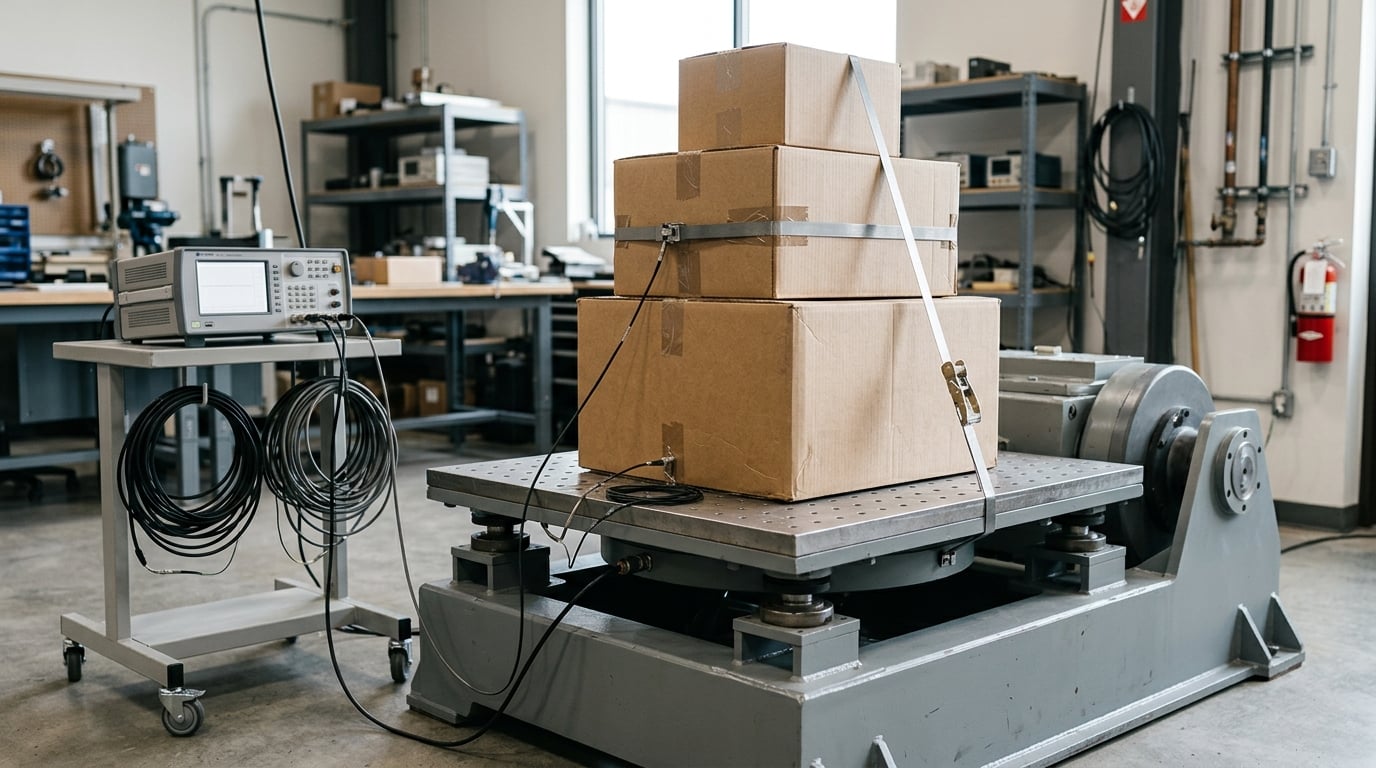
ISTA testing protocols are standardized laboratory procedures published by the International Safe Transit Association. Each one recreates the drops, vibration, compression, impacts and climate a package meets in a specific distribution channel, so you can find out whether the packaging works before thousands of units ship.
Most people arrive here with one question: which test do I book? The answer depends less on the product name than on how the box actually travels, how heavy it is, and how much abuse the contents can absorb. This guide walks through the protocol system, the difference between the two procedures you will hear about most, and how to read the report when it comes back.
Standards current as of October 2026. This article is independent of ISTA and is not a substitute for the official standard, which is copyrighted and must be purchased from ISTA.
Table of Contents
- What Are ISTA Testing Protocols?
- ISTA 3A vs. 3E: Which Test Fits Your Distribution Channel?
- Which ISTA Protocol Should You Choose?
- ISTA Testing Protocols for Common Distribution Routes
- How Do ISTA Tests Simulate Distribution Hazards?
- How to Prepare and Run an ISTA Test
- How to Interpret ISTA Test Results
- What Should You Do When Packaging Fails?
- What ISTA Testing Does Not Prove
- Who Uses ISTA Protocols and Why
- Frequently Asked Questions
- Is ISTA testing certification?
- Can an ISTA test be modified for a unique product or shipping route?
- How many packages should be tested under an ISTA protocol?
- Does passing an ISTA test guarantee the package will survive shipping?
- Should a prototype package be tested before production tooling?
- When should a failed ISTA test be repeated?
- Conclusion
What Are ISTA Testing Protocols?
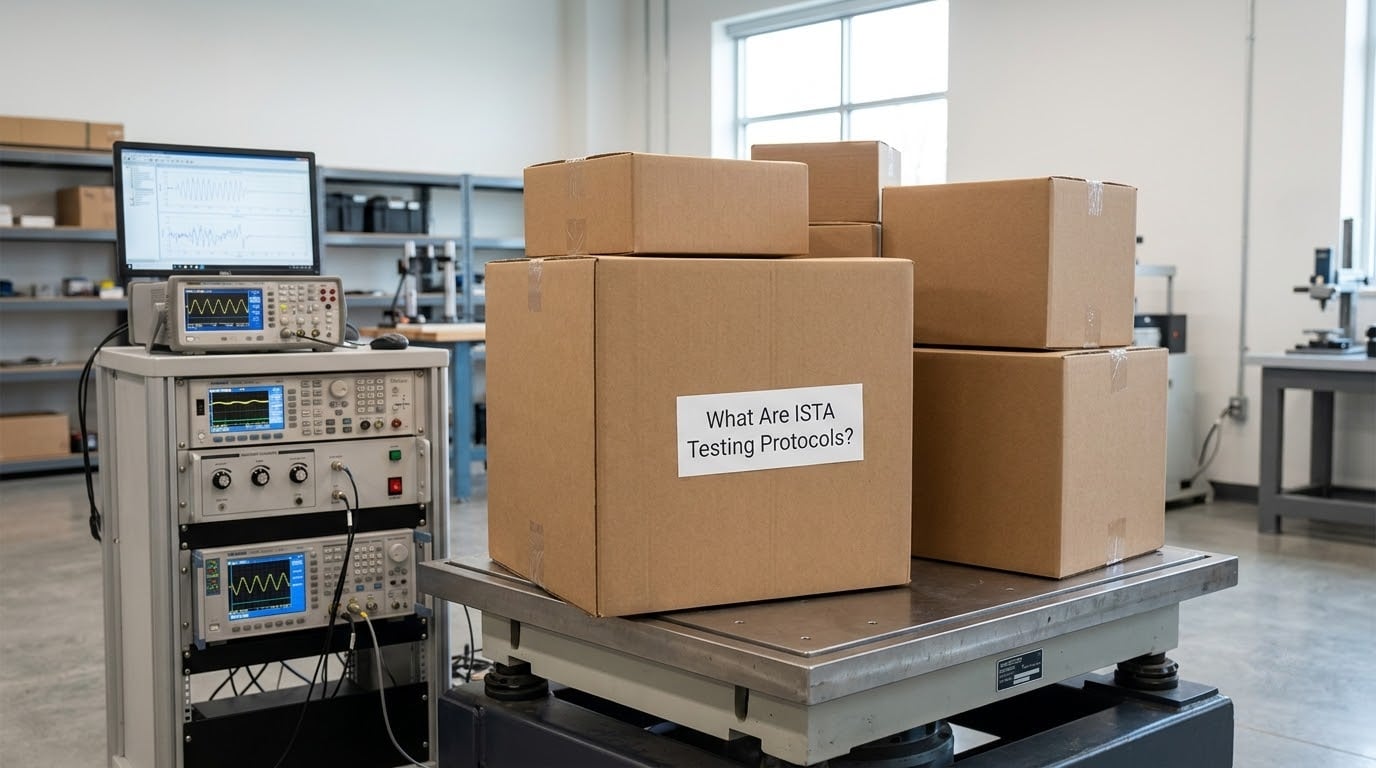
An ISTA protocol is a written recipe. It names the sample package, the conditioning environment, the sequence of tests, the severity levels, the number of specimens, and the report format. A lab that follows it exactly produces results that another lab can reproduce, which is the whole point.
ISTA writes the methods, not the answer. The damage that counts, the tolerance the product can survive, and the condition a package is allowed to be in afterwards all come from the shipper. That single fact changes how you should approach a booking, and it comes up again in every section below.
Every ISTA procedure document follows the same three-part structure. The Overview explains scope, applicability and definitions. The Testing section carries the sequence and severity tables. The Reporting section states what the lab records and hands back. When you look at a procedure in ISTA’s store, you are looking at those three parts, which is why a free overview can tell you whether a test is broadly right while the full document tells you exactly how to run it.
What protocols are not: a legal requirement, a certification your product can hold, or a guarantee of delivery. ISTA itself states that test levels are based on general data and may not represent a specific distribution system. A protocol is a repeatable yardstick, and most damage still happens in transit.
The organization also runs a laboratory certification program. Certification is scoped to a protocol code and a test block, so a lab approved for one procedure is not automatically approved for another. ISTA recertifies on a two-year cycle, and its Find a Lab directory is the only reliable way to check whether a specific lab can run the specific code you need.
One naming note before you go further. ISTA also publishes rules for seed testing, an agricultural field and laboratory discipline run through the association’s seed testing program. Those documents are unrelated to shipping packaging, and search engines routinely mix them. Everything in this guide is about transport packaging.
ISTA 3A vs. 3E: Which Test Fits Your Distribution Channel?
ISTA 3A is for individual parcels moving through a parcel delivery system. ISTA 3E is for full truckload freight where many unit packages ride on a pallet as one shipment. They are not interchangeable, and running the wrong one wastes a full lab cycle.
| Dimension | ISTA 3A | ISTA 3E |
|---|---|---|
| Intended distribution | Parcel delivery system, one package per shipment | Full truckload, unit packages stacked on pallets |
| Package weight band | Up to 70 kg (about 150 lb) | Heavier shipments, often palletized groups |
| Packaging focus | Single shipper, retail or direct-to-consumer | Pallet loads, stretch wrap, unit stacking |
| Test sequence | Conditioning, then shock and vibration blocks in a defined order | Conditioning, then vibration, handling and stacking blocks |
| Key equipment | Drop tester, random vibration table, incline impact device | Vibration table, horizontal impact device, compression and stacking equipment |
| Relative severity | Built around the repeated handling a parcel receives at hubs and on belts | Built around long-haul vibration, load shift and stack weight |
| Typical application | E-commerce shipments, small parcel freight, retail replenishment parcels | Palletized case goods, industrial products, club and retail distribution |
| Limits of substitution | Does not reproduce a full truckload stack environment | Overly severe for a single parcel, and a retailer may refuse the report |
The practical difference in one sentence: 3A asks whether one box survives being handled over and over, while 3E asks whether a stack of boxes survives the road. If your customer receives one box at a time through a courier, 3A is the correct starting point. If your product ships palletized to a warehouse and gets stacked with freight, ask for 3E or a related freight procedure.
Neither procedure is the hardest available. Series 3 procedures cover general simulation, and each code reflects a different channel. Using a more severe procedure than the real distribution demands pushes you toward over-engineered, heavier packaging and wasted material.
Which ISTA Protocol Should You Choose?
Choose by evidence, not by label. Six steps cover most decisions.
- Find out who asked. Retailers, carriers and marketplace programs often name a specific code in their supplier requirements. That code wins every other consideration.
- Write down the real route. Which carriers, hubs, ports and modes does the shipment touch, and how many times is the box handled or tipped?
- Know the weight and dimensions. The 70 kg (150 lb) threshold splits several procedure families, and the distribution channel changes the right series entirely.
- Define damage before the booking. Decide what counts as product damage, what the product can tolerate, and what package condition is acceptable afterwards.
- Screen cheaply, then confirm. Series 1 and Series 2 procedures assess basic and partial simulation at lower cost, which is useful for ranking design options before a full run.
- Verify the lab for that code. Check ISTA’s Find a Lab directory for the exact procedure and test block, and confirm the report format your buyer requires.
Step four is where brands most often lose money. A report is only meaningful against criteria agreed in advance, and a lab cannot invent your product’s damage tolerance. Communities of packaging engineers consistently describe the pre-agreed damage definition, not the machine data, as the decision-changing part of a run.
ISTA Testing Protocols for Common Distribution Routes
Route determines hazard, and hazard determines protocol. These five channels cover most shipping.
Parcel delivery
A parcel moves through conveyor lines, sorting equipment, chutes and van doors, and takes a shock every time it is tipped or dropped from a belt. Individual parcels of up to 70 kg (about 150 lb) fall under the general simulation procedures in Series 3, with 3A the common starting point for e-commerce and direct-to-consumer shipments.
Motor carrier and less-than-truckload
LTL shipments ride with freight from many origins, so the box sees extended vibration, load shift and abrasion from neighbouring cartons, plus forklift handling at terminals. General simulation procedures in Series 3 built for motor carrier and freight distribution, including the 3E family for full truckload, match those conditions better than a parcel procedure does.
Rail
Rail adds long, steady vibration and repeated shock events over multi-day journeys, with less handling than parcel but more sustained exposure. The protective design needs to survive time in transit rather than the number of handlings, and freight-simulation procedures in Series 3 are the closer match.
Air cargo
Air freight is the least punishing environment of the group. Low pressure at altitude changes how cushioning behaves, so air cargo procedures include low-pressure vibration as part of the sequence. Many brands over-pack for this channel and pay for material they never needed.
Ocean
Ocean shipments face weeks of vessel motion, large swings in temperature and humidity, and long storage under stack weight. General simulation alone will not cover it, so extended series such as the 7 family add extended-duration and environmental cycling for insulated, refrigerated and moisture-sensitive loads.
Mixed-channel distribution
Products that leave a factory overseas, clear a port and move to regional warehouses see a different hazard set at each leg. Rather than blending protocols, most teams run the procedure matching the most punishing leg, then verify the rest through handling and monitoring data from live shipments.
How Do ISTA Tests Simulate Distribution Hazards?
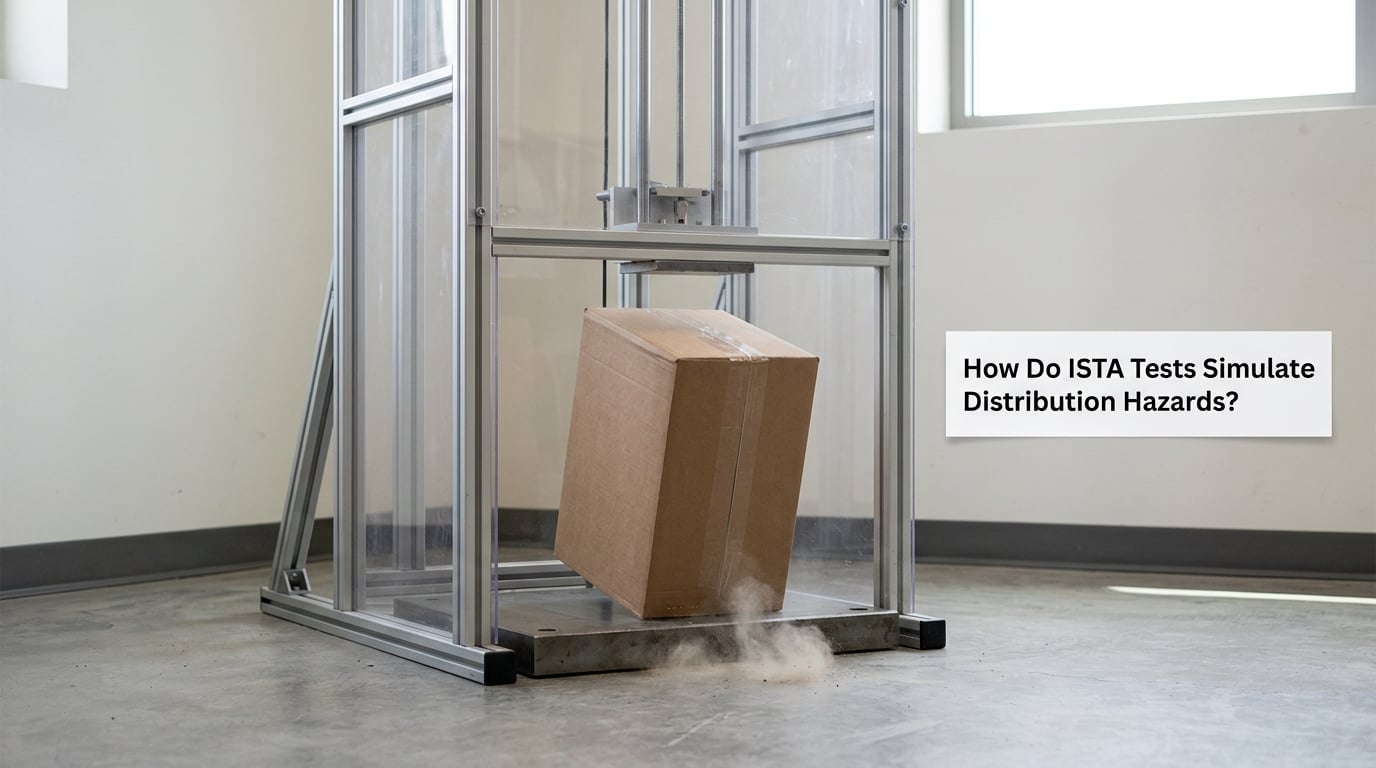
Protocols are built from a small set of test methods. Understanding what each one does, and what it leaves out, tells you more than the procedure code does.
Drop test
A packaged specimen is released at a set height onto a selected face, edge or corner. It reproduces free-fall and the impact energy a package receives from a conveyor drop, a manual handling mistake or a vehicle pothole. It does not reproduce the sustained shock of a rail impact or the damage from a package being crushed under a stack.
Random vibration
The package sits on a table driven by a profile that varies in frequency and amplitude the way road and air vibration do. It finds loose components, rattles and resonant failure inside the box, and it exposes cushioning that creeps over time. It does not simulate impact events.
Compression
A platen presses down on a stacked or individual package to reproduce the weight of freight above it. It catches a shipper that looks fine on the bench but collapses in a warehouse stack. It does not reproduce vibration-driven loosening of the contents.
Incline and horizontal impact
A tilted platen slides the package into a barrier, and a horizontal impact device strikes it from the side. These reproduce conveyor transfers, dock handling and pushes during sorting. They catch damage to edges and corners that a flat drop misses.
Rotational edge drop
The package lands balanced on one edge rather than flat, concentrating energy into a corner. It is the harshest of the drop orientations and is used in procedures for very heavy shipments where a corner strike can collapse the box.
Climatic conditioning
Before testing, specimens sit in a controlled environment so board, film and cushioning reach a known temperature and humidity state. Some procedures use a short ambient precondition; others call for extended controlled conditioning. Conditioning dominates the schedule more than the machine time does, and it is the reason a three-day turnaround is common even for simple drop work.
What no single protocol reproduces: the exact handling of one particular carrier’s network, the human factor of a hurried worker, shelf and display loading after delivery, temperature extremes outside the conditioned range, and long-term material aging.
How to Prepare and Run an ISTA Test
Running an ISTA protocol is a workflow with a paperwork step most people skip and a logistics step most people underestimate.
- Define the distribution environment. Write the route, carriers, handling events, transit duration, weight, dimensions and storage conditions. Attach photos of the current configuration.
- Set acceptance criteria in writing. State product damage definition, damage tolerance, acceptable package condition and what happens to data after the run. Send it to the lab before the samples ship.
- Choose the specimens. Use production-intent packaging and representative product, or the documented equivalent the procedure allows. ISTA guidance commonly notes one sample as the minimum and five as the recommended count for fragile goods.
- Document the construction. Record board grade, dimensions, cushioning material, closure method, tape pattern and any changes from the drawing. Undocumented construction is the most common reason a result cannot be repeated later.
- Condition, then test in sequence. The lab conditions the specimens to the specified environment and runs the procedure blocks in the order written. Do not reorder blocks to save a day; sequence is part of the standard.
- Inspect and record. After each block, the lab photographs all faces, notes damage and evaluates the product against your criteria.
- Preserve the results. Keep the report, the test data, the photographs and the sample photographs with the packaging revision number. A result with no link back to a configuration cannot inform the next design.
A practical warning from practitioners: damaged or repacked samples invalidate the run. If a box arrives crushed or has been restacked with extra tape, the report describes something you will never ship.
How to Interpret ISTA Test Results
Read the report in five passes, and resist the single pass/fail label most people look for first.
Product condition first. Did the contents function or survive within tolerance? A package can look dented and the product be fine, and that outcome is a pass against your criteria even though the box looks ugly.
Then package condition. Look at crush, punctures, split seams, closure failure and loss of cushioning. Package damage matters because it predicts the next shipment will be worse.
Look at where it failed. A corner failure and a seam failure point at different fixes. A bottom puncture and a top crush almost never share a solution.
Track protection over time. Cushioning that holds through the first block and fails after the third tells you the design is marginal, even if the final sample passed.
Check the acceptance criteria in the report. ISTA does not define pass or fail. The shipper does. If the report does not show your criteria being applied, the document is a data record rather than a pass, and it will not satisfy a supplier audit.
That last point is the one that catches brands out. A neat report with no damage definition attached reads as an incomplete submission to a quality team.
What Should You Do When Packaging Fails?
Fix the failure mode, not the symptom. Work down this list and change one variable at a time.
Cushioning
If the product rattles, vibrates loose or cracks under shock, the cushioning is the problem. Change material, thickness or placement, and re-check that the product is immobilised in all six directions rather than resting on a single pad.
Restraint and orientation
When components shift and hit each other, restraint is missing. Crumple, die-cut or brace inserts so the product cannot travel inside the box even when the box is dropped on an edge.
Closure
Seam failures and burst closures are closure problems. Extend flap overlap, change the tape grade, or move to a different closure style such as a hook-and-loop or buckle strap for heavy or flat items.
Board grade and dimensions
Crush failure under stacking means the board or the pallet pattern cannot carry the load. Raise the board grade, change flute, or reduce the size so the shipper is not being asked to carry more than the material supports.
Moisture protection
Softening, delamination and mould in a conditioned run point at humidity. Add a moisture barrier, switch to a waxier or plastic film, and consider the extended environmental procedures if the load is climate-sensitive.
Distribution redesign
Sometimes every package fails because the route is harsher than assumed. Reducing handling events, changing the pack size, or splitting the load into smaller units is cheaper than adding material to a box that keeps being crushed.
Retest when the change is structural: new board, new cushioning, new closure, or a different pack configuration. Screening-level changes can often be judged against existing data, but any change to the protective system deserves a fresh run. When you retest, ship new samples of the new configuration, not the previous specimens.
What ISTA Testing Does Not Prove
Passing an ISTA protocol is useful and limited at the same time, and knowing the boundary keeps you from over-investing in the wrong protection.
A single laboratory run is not a statistical guarantee. It is a repeatable measurement on a small number of specimens under defined conditions. It says nothing about how your packaging performs across millions of shipments handled by different people.
It does not cover the handling your protocol did not model. Unpredictable manual handling, a parcel crushed under a heavier box at a hub, or a pallet restacked unevenly on a dock all sit outside the simulated sequence.
It does not address life after delivery. Shelf loads, retail display stacking, customer opening technique and long-term storage are outside the protocol, and they damage products more often than people expect.
It does not cover temperature extremes or multi-month aging unless the procedure includes extended environmental blocks. A package that passes at conditioned conditions can still perform poorly in a hot container or after adhesive ageing.
It does not identify the exact route. ISTA states the levels are built on general data and may not represent a specific distribution system, which is why matching the procedure to your documented route matters more than picking a familiar code.
Finally, engineering qualification is not the same as laboratory certification. A lab certification confirms the lab is competent and equipped to run a specific procedure to the standard. Your package’s ability to survive is a separate question, answered by your own test results against your own criteria.
Who Uses ISTA Protocols and Why
Different roles use the same protocols for different reasons, and that is why a report rarely answers the question its reader actually had.
Packaging engineers use protocols as a design tool. They screen several concepts cheaply, then confirm the chosen one at full simulation before committing to tooling or a material purchase.
Quality and QA teams use them for supplier qualification and for release criteria. A supplier requirement that names a code turns a lab report into an audit artefact, which is why the exact code matters.
Buyers and sourcing managers use them to hold vendors to a common measure. Without one agreed procedure, a dented box becomes an argument rather than a result.
Logistics and fulfilment leads use them to set expectations for channels, cube efficiency and material weight, and to decide whether a route is realistic for the current pack.
Testing laboratories run the procedures, control conditioning, document sequences and issue reports. Their certification is scoped by procedure code and block, so check the specific code rather than asking whether the lab is ISTA certified in general.
Manufacturers and e-commerce sellers use them mainly to cut damage and returns. The business case is straightforward: every avoided damaged delivery removes replacement cost, refund cost, a customer complaint and a review that never recovers.
Frequently Asked Questions
Is ISTA testing certification?
Not in the way most people mean it. ISTA publishes the standards and runs a laboratory certification program, but there is no certificate a product or a brand can hold that proves its packaging is ISTA approved. What exists is a lab certification scoped to a specific procedure code and test block, plus a test report showing your samples met the criteria your organization defined. Read the report, not the logo on the envelope.
Can an ISTA test be modified for a unique product or shipping route?
The procedure stays intact; your configuration and criteria are what you shape. You can submit a different pack size, a different closure, or a modified internal fit-out, and the lab runs the same sequence and severity on it. You can also define your own acceptance criteria. What you cannot do is quietly reduce severity or drop a required test block and still call the result an ISTA report. Modifications have to be declared in writing before the run.
How many packages should be tested under an ISTA protocol?
ISTA guidance commonly cites one specimen as the minimum and five as the recommended count for fragile goods, and the exact figure depends on the procedure and on how much confidence you need. Fragile or damage-tolerant products deserve the higher count, because a single pass on one box tells you very little. If the goal is a supplier audit, match the count your buyer’s supplier requirements specify rather than guessing.
Does passing an ISTA test guarantee the package will survive shipping?
No. A passing result means your samples met the criteria you set under the conditions the protocol specifies. ISTA notes that test levels are built on general data and may not represent a specific distribution system, and no laboratory test covers unpredictable human handling, shelf loading, temperature extremes or long-term ageing. Treat a pass as evidence that the design is sound for the route you documented, not as insurance.
Should a prototype package be tested before production tooling?
Yes, and it is the cheapest sequencing decision you will make. Testing at prototype stage lets you compare two or three constructions against the same criteria, and the cost of changing board, cushioning or closure early is trivial next to retooling a mould or reordering material. Screen with lower-simulation procedures, confirm the chosen design at full simulation, then freeze the configuration and test production-intent samples before release.
When should a failed ISTA test be repeated?
Repeat the test whenever the protective system changes: new board grade, new cushioning, new closure method, a different pack size or a changed internal fit-out. Those are structural changes, and a previous failure no longer describes the new design. Purely cosmetic changes, like a print or label update, usually do not need a full run. Always retest with new specimens of the new configuration, never by reusing the samples that already failed.
Conclusion
Start with the paperwork, not the booking. Document the actual distribution chain, the package configuration and the product’s damage tolerance, then pick the protocol that matches the most punishing leg of that route.
That sequence is what separates a useful test run from an expensive one. The machine only reports what you told it to look for, and the protocol you choose decides which hazards get simulated and which stay invisible.