
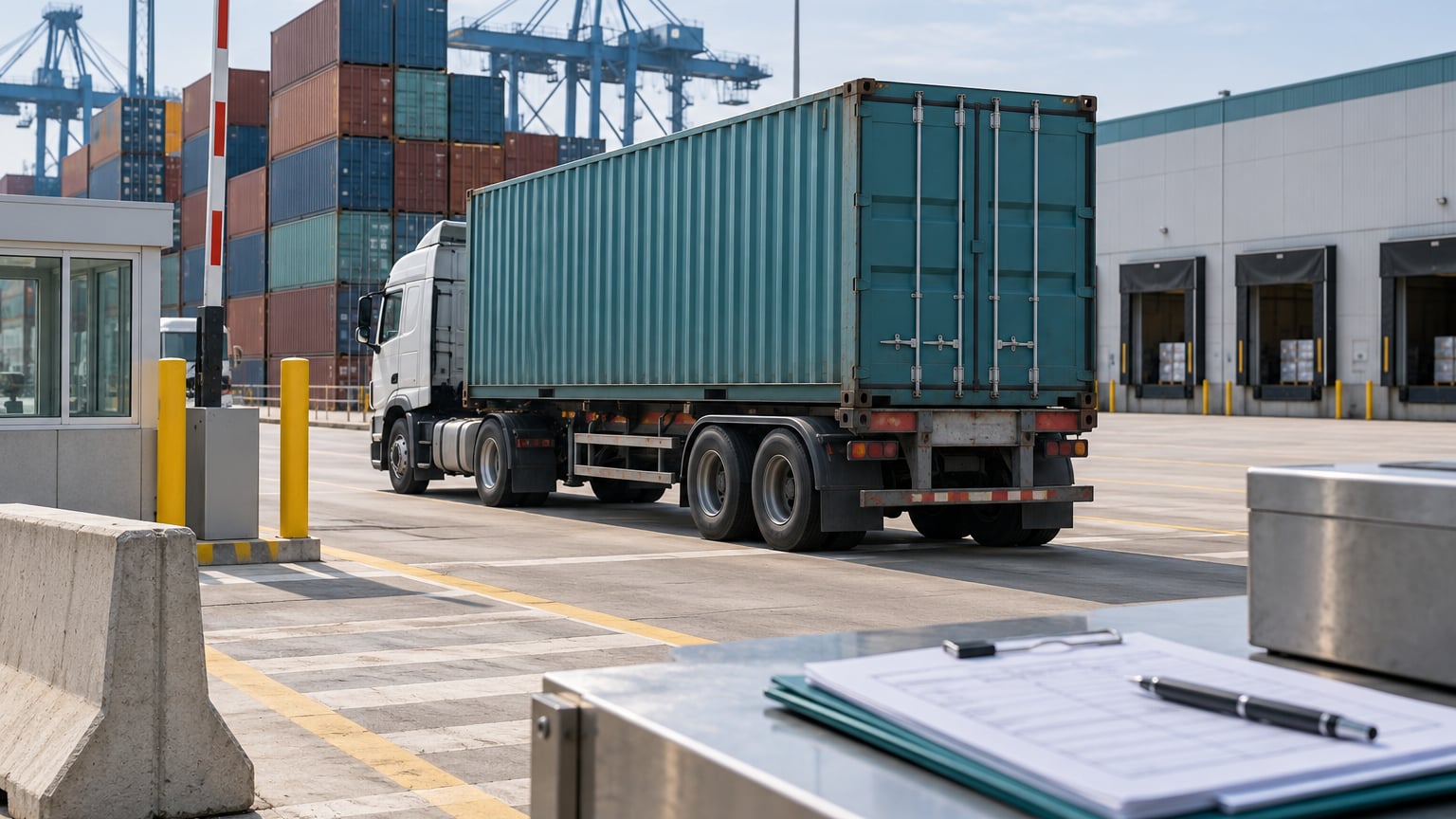
Drayage in shipping is the short-distance transport of freight, usually inside a shipping container, by truck between a port, rail terminal, warehouse or nearby distribution hub. It is the first or last leg of an intermodal journey, and the word refers both to the movement itself and to the fee charged for it.
That single idea explains why drayage gets treated as a footnote when it is really the hinge of the whole chain. A vessel can arrive perfectly on schedule and the container still sits in a yard for a week while somebody sorts out an appointment and a chassis.
This guide is written for buyers and operations people at US manufacturers and distributors. No vendor is being promoted, and every example here is the kind of move that shows up on a normal import or export lane.
Table of Contents
- What Is Drayage in Shipping?
- How Does Drayage in Shipping Work?
- What Is the Difference Between Drayage and Freight?
- What Does a Drayage Rate Include?
- Why Are Drayage Charges Different for Every Shipment?
- How Can Manufacturers Reduce Drayage Delays and Costs?
- Drayage in Shipping for Plastics and Packaging Operations
- Frequently Asked Questions
- Conclusion
What Is Drayage in Shipping?
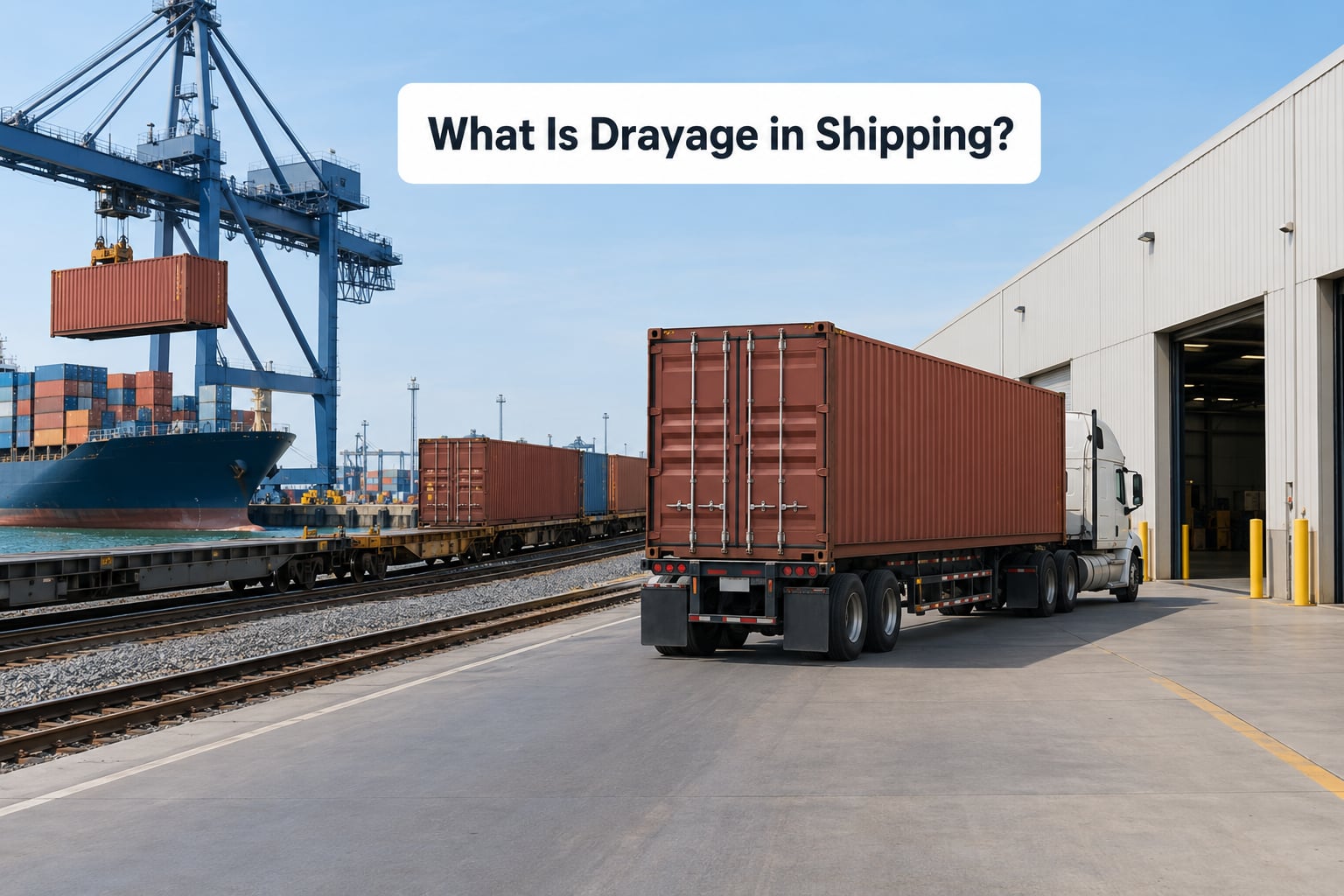
Drayage in shipping is the truck move that connects a container to somewhere it actually needs to be. The container arrives by ship or train, and a drayage truck takes it from the terminal gate to your dock, your warehouse, a transload facility, or a rail ramp. Without that connection, a container has landed in a yard and gone no further.
It is pronounced DRAY-ij. The word comes from the dray, a low, heavy horse-drawn cart used in the 1800s to haul barrels and goods, and the sense of a flat, sturdy wagon carrying awkward weight is still there in the way a chassis sits low under a forty-foot box.
Other words you will hear for the same activity are port trucking, drayage trucking and drayage services. When someone says drayage is included in your shipment, they usually mean the trucking fee has been folded into a quote rather than billed separately.
Two things make drayage different from ordinary trucking. The distance is short, often well under a hundred miles, and the cargo is a sealed container that the driver never opens and never handles piece by piece. That combination of short haul and awkward freight is why the pricing looks unusual for such a short trip.
Here is a concrete case. A plastics manufacturer in Ohio books a forty-foot container of injection-molded parts from a supplier in northern Vietnam. The vessel docks at Long Beach. The container sits for six days. A drayage truck then runs it to a customs warehouse in Inland Empire, and from there a different truck takes it to the plant dock, about fifteen miles away. That plant-bound move, whether handled by the same carrier or not, is what people mean when they talk about drayage in shipping for that shipment.
How Does Drayage in Shipping Work?
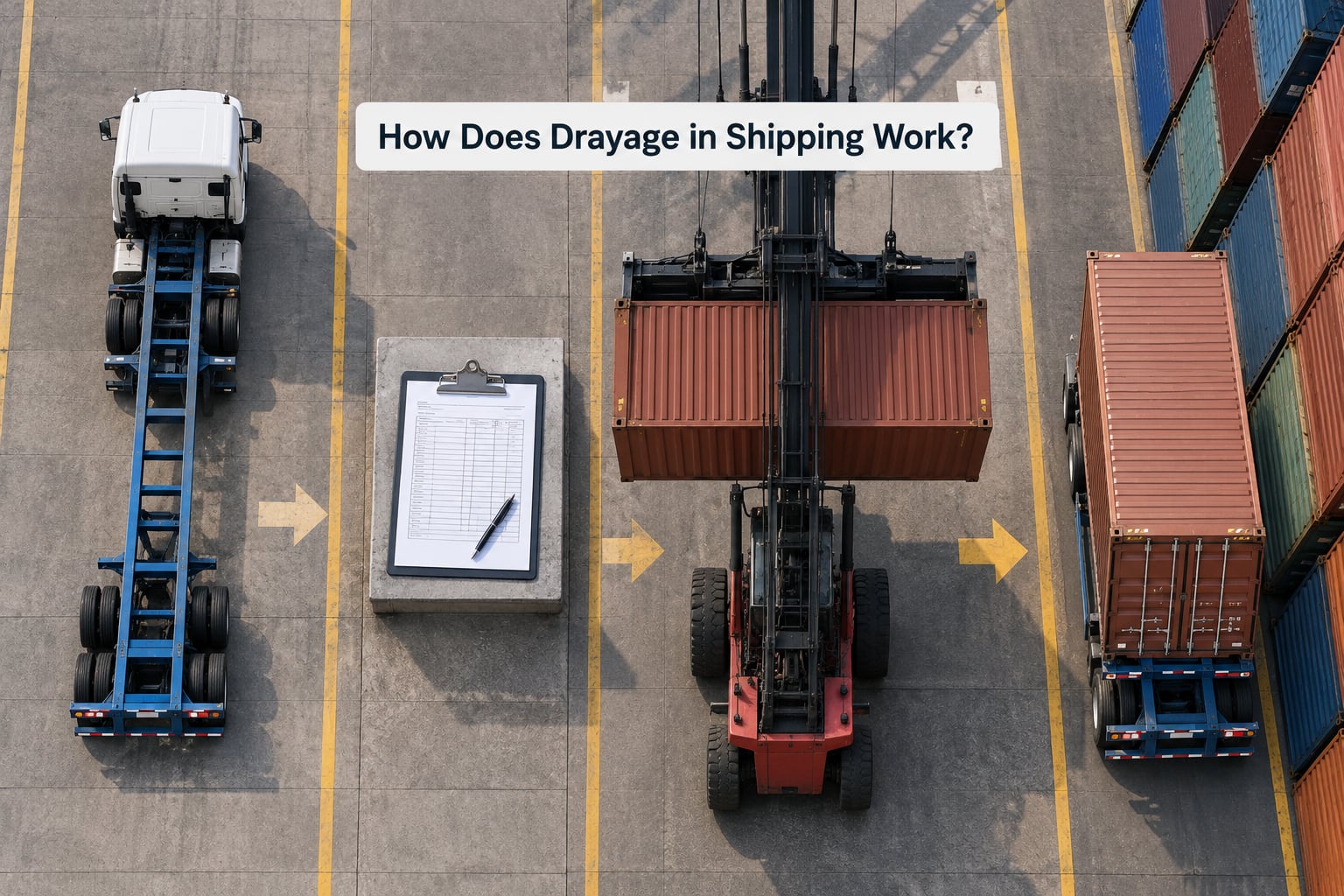
A container move runs in stages, and each stage has its own owner. Understanding who holds the ball at any moment is most of what separates a smooth import from an expensive one.
Booking and dispatch. Once the container is available, a drayage provider is booked with the container number, size, weight, commodity and delivery address. The booking is placed against a terminal appointment rather than a delivery promise, because the terminal controls when the truck may enter.
Terminal pickup. The driver checks in at the gate, presents the release and terminal numbers, and picks up the chassis from the pool or brings one supplied by the terminal. Pier pickup, where a container is lifted off the vessel directly onto a chassis, is a different and tighter arrangement that needs more notice.
Delivery or transload. The truck delivers to your facility, or to a transload facility where the contents are consolidated with other loads. Rail moves go the other way, from a port to a rail ramp, where the same box is set on a well car instead.
Empty return and closeout. After unloading, the chassis goes back to the yard and the empty container is returned inside the terminal’s free time. Paperwork closes out the move, and that is when detention and demurrage either do not appear or start to.
Six or more parties touch a single container move: the ocean carrier, the customs broker, the terminal, the drayage carrier, the warehouse, sometimes a freight broker in the middle, and you. Each handoff can stall on its own, which is why the distance is rarely what decides whether a move goes well. People who broker this work say it plainly: coordination beats mileage every time.
The parties split the roles like this. The shipper or importer owns the commercial instructions and pays. The freight broker arranges capacity when there is one in the chain. The ocean or rail carrier moves the container over the long haul. The terminal operator controls the yard, the appointments and most of the fees. The drayage provider owns the truck, the driver and the physical move on the road.
What Is the Difference Between Drayage and Freight?
Drayage is a specific short-haul trucking service, while freight is the whole business of moving goods. Comparing them by scope, equipment and price basis makes the distinction obvious.
| Mode | Scope | Equipment | Typical route | Pricing basis | Speed | Party usually responsible |
|---|---|---|---|---|---|---|
| Drayage | Short-distance container moves around a metro area | Day cab tractor with a chassis | Port, rail ramp or yard to warehouse or dock | Per move, often with a fuel surcharge and accessorials | Same day to a few days | Importer or exporter, or their 3PL |
| Ocean freight | Long-haul international carriage | Vessel and stacked containers | Origin port to destination port | Per container or per square foot for the lane | Weeks | Shipper, through a freight forwarder |
| Rail intermodal | Long-haul domestic carriage of containers | Well cars and rail containers | Inland origin to inland destination | Per container on the lane | Several days | Shipper or rail broker |
| Truckload | Long or short haul of the shipper’s own freight | Tractor with dry van, flatbed or reefer | Shipper facility to consignee facility | Per mile or per load | One to three days domestically | Motor carrier under a freight agreement |
| Last-mile delivery | Final delivery from a terminal or sort center | Straight truck, box truck or courier van | Sort facility to door | Per parcel, per stop or per mile | Hours | Parcel carrier or final-mile carrier |
There is some overlap at the edges. A drayage provider may also quote the plant-bound trucking leg, and a transload facility sits between drayage and truckload. But if the move starts inside a terminal yard with a sealed container and ends at a dock, it is drayage.
What Does a Drayage Rate Include?
A drayage rate is usually a base linehaul plus a set of fees that can each be triggered by something outside your control. The base number is the least interesting part of the invoice.
The base linehaul covers the truck and driver for one move, and many carriers price it as a lump sum per container rather than per mile because the distance is short and fixed. A fuel surcharge is added on top and moves with diesel prices, usually expressed as a percentage of the linehaul rather than a cents-per-mile figure.
Then come the accessorials, and these are where the surprises live.
- Pre-pull takes the container out of the terminal and to a nearby yard the night before delivery, which helps when terminal appointments are tight or your dock has no room to wait.
- Drop and yard leaves the chassis and container on your property or in a third-party yard instead of returning it, and you pay for the storage that follows.
- After-hours or weekend delivery covers dock hours that fall outside the normal receiving window, and it is usually a flat add-on rather than a higher base rate.
- Storage applies to the container itself, whether it sits at the terminal or at a drayage yard, and it typically starts after a few free days.
- Special equipment means a chassis other than the standard twenty or forty footer, such as an extendable chassis for a forty-five footer or a tri-axle setup for heavier weights.
- Permit and escort costs show up on oversized or overweight moves and can include route surveys, escorts and bridge analysis ahead of the run.
Two charges often get confused with the trucking rate, and keeping them straight matters. Detention is what the carrier or line charges when the container or chassis is held past the allowed free time. Demurrage is what the terminal charges when the container stays in its yard past free time. The same container can pick up both if the move stalls badly, because the box is late leaving and late coming back.
If a quote says it includes terminal fees, ask which ones. A rate that includes pier passes and gate fees can still exclude lift charges on a pier pickup or a chassis rental when the pool runs short.
Why Are Drayage Charges Different for Every Shipment?
Drayage pricing is not a stable published tariff, so two containers moving to the same zip code can produce two very different invoices. The variables are mostly operational.
- Container type and size. A standard twenty-footer is easy to handle. A forty-foot high cube, a flat rack with out-of-gauge cargo, or anything needing special equipment adds cost and sometimes requires a second approval process.
- Lane distance. Short moves carry a higher rate per mile because the fixed costs of the dispatch, gate check and paperwork are spread over fewer miles.
- Terminal congestion. When a port is backed up, chassis come off the pool slowly and gate queues stretch. Waiting time becomes a billed hour rather than absorbed overhead.
- Appointment windows. Terminals hand out slots, and a slot you cannot make is either lost or rescheduled, sometimes with a charge attached.
- Chassis availability. Pool shortages at certain terminals mean a chassis rental fee that the terminal passes through to the trucker and the shipper.
- Cargo handling needs. A reefer needs power hookups and monitoring. Heavy or out-of-gauge cargo needs permits, route planning and sometimes escorts.
- Destination restrictions. Some facilities cannot take a forty-footer, or have no space to swap a chassis, and that pushes the move to a yard first.
- Market conditions. Drayage capacity tightens with import volume and loosens when volumes drop, which moves rates within a single quarter.
The reason a big importer can often beat a small one on rate is simply that a large buyer books steady volume and holds better equipment relationships. The small shipper pays the lump-sum move instead.
How Can Manufacturers Reduce Drayage Delays and Costs?
Most drayage problems trace back to a small number of predictable failures. These steps address the ones that actually show up.
Get the commercial references right before booking. Mismatched references cause holds at customs, and a held container still accrues terminal days. Someone on your team should own verifying the shipper, consignee and bill-to details against the paperwork.
Treat the terminal appointment as a hard constraint. Carriers set equipment deadlines and terminals set appointment windows, and neither one is a suggestion. If a driver misses, the whole move re-books.
Check chassis availability before you commit to a delivery date. Brokers say chassis and release timing are the two things that decide whether a move runs smoothly. Ask the drayage provider what the pool situation is at that specific terminal.
Plan the gateway and the empty return before the pickup. Decide where the box goes after it is unloaded, and who returns the empty to the yard inside free time. Well-run operations plan the return before the loaded container has even left the terminal.
Have documents ready before the truck moves. Release order, terminal number, appointment confirmation and customs clearance in the same place the dispatcher can see them.
Keep a backup carrier for the lanes you run weekly. Brokers running meaningful container volume usually keep a short list of four or five providers they trust, built around response time and communication rather than the lowest quote.
Watch container status yourself. Do not assume the container is fine because the vessel docked. Someone should check availability and release at least daily.
Align delivery with your dock, not the clock. A driver who arrives at a warehouse that is not ready to unload turns into a failed delivery attempt and a wait charge. Giving the carrier a real receiving window prevents that.
Ask carriers who watches the container and how often, who owns coordination across the whole move, and what happens when the warehouse is not ready. In broker communities those questions separate the providers who run on time from the ones who merely quote low. Cheap drayage with poor coordination routinely costs more than a fair quote that runs on schedule, because the accessorials recover the difference and then some.
If your sourcing footprint is shifting, the same planning logic applies to where the container comes from. Our write-up on nearshoring versus offshoring tradeoffs covers how shorter, more frequent shipments change the transportation picture.
Drayage in Shipping for Plastics and Packaging Operations
Plastics and packaging shipments bring a few requirements that a dry consumer container does not. Knowing them before the container is booked saves argument at the dock.
Resin pellets and compounded material ship in bulk bags or lined containers, and weight is the constraint. Container weight limits have tightened at several US terminals, so gross weight and packaging configuration have to be declared accurately. An overweight declaration at the gate is a failed pickup, not a surcharge.
Contamination control matters more for resins than for most freight. Seals should be checked at the gate and again at unload, and any seal discrepancy gets photographed before the container is opened. A container that has been sitting in a yard through rain is a conversation you want to have early rather than at the dock.
Temperature-sensitive loads such as precolored compounds or film resins that cannot tolerate heat need a container that is not sitting in direct sun if a pre-pull or overnight yard stay is part of the plan. Ask what happens to the box between the terminal and your receiving dock.
Securement for molded parts. Injection-molded parts are light for their volume and shift badly when the box is empty of gravity. Blocking and dunnage inside the container matters, and so does how the container is set down at your dock.
Delivery windows tie back to production. A truck that cannot unload when it arrives has nowhere to put forty feet of box, so it waits or leaves. Schedule inbound freight against your press schedule rather than against the carrier’s transit guess.
The unloading side matters just as much. Our guide to material handling systems built for resin covers what has to be in place when the container is opened, and our piece on statistical sampling plans for molders covers the incoming inspection that follows.
Frequently Asked Questions
Is drayage the same as trucking?
It is trucking, but a narrow kind of it. Drayage is short-distance, container-only hauling between terminals, ramps, yards and nearby facilities, usually inside a single metro area. A truckload carrier moves your own freight over longer distances with your equipment. If the load is a sealed container moving out of a yard or into one, it is drayage.
Who usually pays the drayage charges?
The party that books the move, which is usually the importer, exporter or the 3PL working for them. In a door-to-door service the drayage fee is often buried inside a single quote that also covers ocean freight, customs clearance and delivery. When it is billed separately, expect a linehaul, a fuel surcharge and any accessorials triggered by timing problems.
How do drayage companies calculate their rates?
Most drayage moves are priced per container rather than per mile, because the distance is short and the fixed costs are the same regardless of lane length. On top of the base linehaul you will see a fuel surcharge tied to diesel prices, and then accessorials such as a pre-pull, chassis rental, storage, waiting time or an after-hours delivery when conditions trigger them.
What happens if my container is delayed at the terminal?
The delay starts costing you once the container passes its free time. Demurrage accrues for every extra day the box stays in the yard, detention can apply on the chassis and equipment side, and storage may be added on top. If the delay pushes the delivery and the empty return, both sets of charges can land on the same move, which is why brokers plan the return early.
Can a drayage provider deliver a container directly to my factory?
In most cases yes, provided your site can accept the equipment. The carrier needs room for a forty-foot chassis, a clear path to the dock and a way to swap the chassis if the terminal requires it. Some plants and distribution centers cannot take a full size container at the door, in which case the move goes to a yard and a smaller truck handles the final leg.
What documents should I have ready before drayage?
At minimum: the release order, the container number, the terminal or pier number, a confirmed delivery appointment, and proof of customs clearance for imports. Export moves need the booking confirmation and any export documentation the terminal checks at the gate. Having all of it in one place that the dispatcher can see is what keeps a truck from being turned away.
Conclusion
Drayage in shipping is the short, unglamorous link that decides whether an international move actually reaches your dock. It is defined by short distance, containerized cargo and a series of handoffs between parties, and the cost is mostly linehaul plus accessorials rather than mileage.
One first step: map the route for a container you are expecting soon, from terminal to dock and back to the empty return. Confirm the appointment window, the chassis situation and the paperwork owner with a drayage provider before the cargo lands. That single conversation prevents most of the fee categories people end up arguing about.