
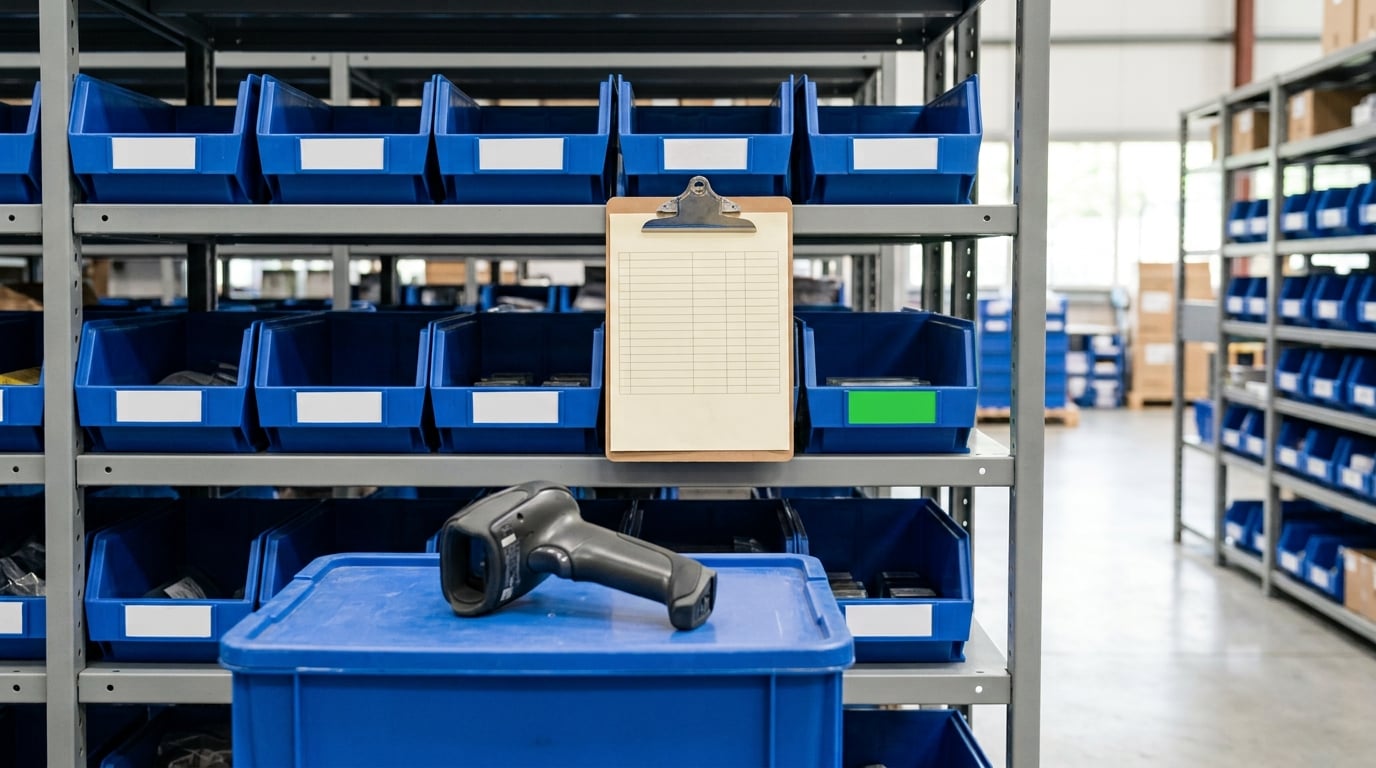
A warehouse picking error is any mistake made while collecting items to fulfil a customer order: the wrong SKU, the wrong quantity, a skipped line, or the right item pulled from the wrong bin. To reduce warehouse picking errors you need controls that catch the mistake at the shelf, not a refresher email after the truck leaves. Nine steps cover it, and most cost nothing but attention.
Pick-and-pack is the single largest block of labour in most distribution operations, which means errors show up everywhere at once. A mispick caught at the pick face is a bin put back and a re-scan. The same mispick caught at packing is a re-pick, a re-pack, a reprint, and a customer who has already waited two extra days.
Below is the sequence I would follow: measure first, fix the data, then the process, then the people, then the hardware. Skipping ahead to a scanner purchase is the most common mistake, and it is the one that reliably wastes money.
Table of Contents
- What You Need
- Step-by-Step: How to Reduce Warehouse Picking Errors in Nine Steps
- 1. Measure the Types and Causes of Picking Errors
- 2. Improve Slotting and Location Labels
- 3. Validate Inventory Accuracy Before Picking
- 4. Standardize Pick Paths and Travel Rules
- 5. Require Scan-to-Confirm Controls on Every Pick
- 6. Train Pickers on Product Identification and Exceptions
- 7. Use Picking Aids for High-Risk Orders
- 8. Audit Picks and Investigate Root Causes
- 9. Review Error Rates and Improve the Process
- Common Mistakes
- Frequently Asked Questions
- Conclusion
What You Need
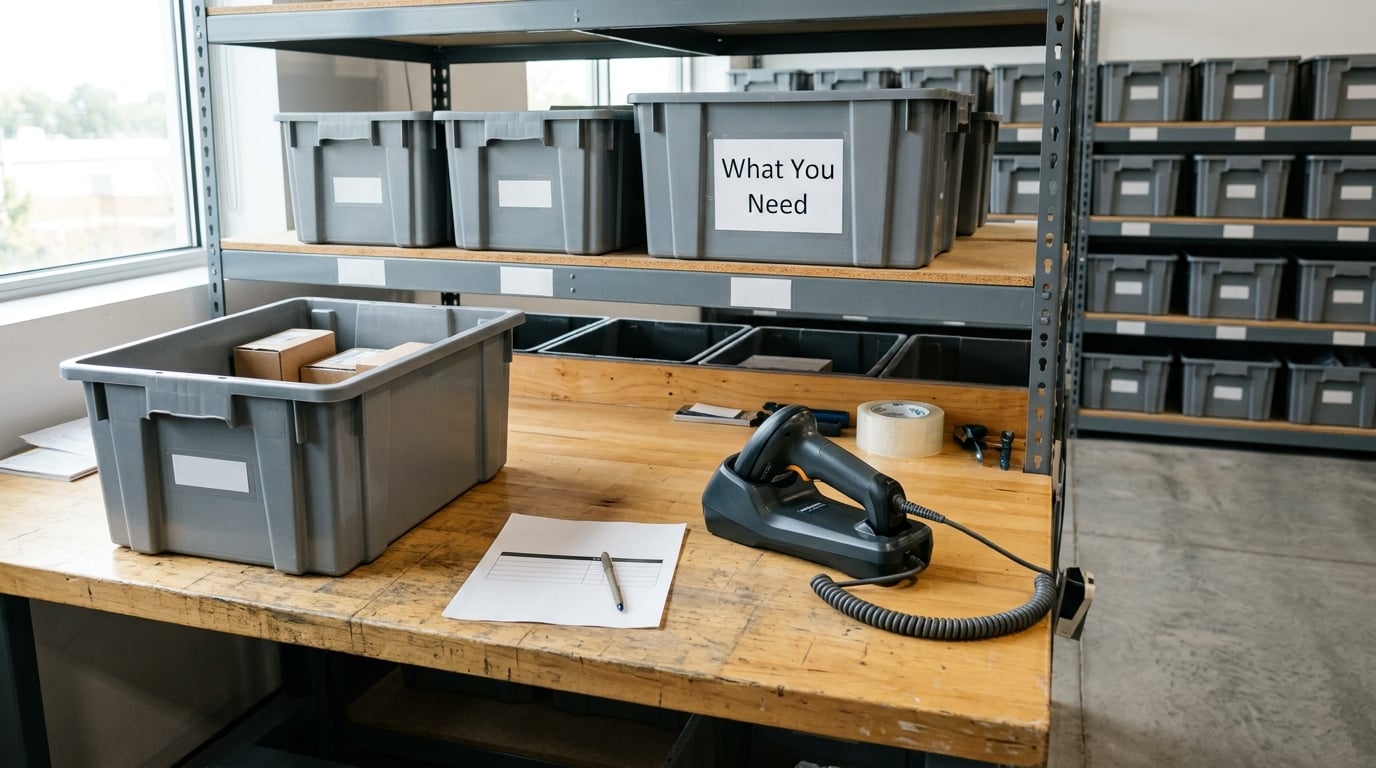
You cannot fix a process you have not instrumented, and you cannot scan a label that does not exist. Before any tactic in this guide does anything, four things have to be true.
Accurate inventory and locations. When a picker scans a bin and the system says there are twelve units of SKU 4471 and there are two, no amount of discipline at the shelf saves the order. Both the quantity record and the location record need to be trustworthy, which is a separate project from picking accuracy.
Defined pick paths. If routing is decided by whoever picked the order last, you have no pick path, you have a habit. Write the sequence down and make the system enforce it.
Scanning technology that works in your building. A handheld scanner with a cracked screen, a trigger that double-fires, or a reader that struggles at four metres is worse than paper, because people learn to work around it. Test hardware in the actual aisle, at the actual light level, with the actual barcodes you use.
A written exception procedure. Empty location, damaged packaging, mismatched barcode, expired lot, unlabelled carton. Each needs a defined action, and each needs a place the exception is recorded so it gets counted later.
Add two more that get skipped: baseline error data from the last month, and a training plan that includes temps and seasonal hires. Peak accuracy problems are usually staffing problems, because the people doing the picking in December are not the people doing it in July.
One test tells you whether your foundation is sound: pick 50 random orders yourself against a printed pick list, blind, with no exceptions raised. If you cannot get 50 for 50 on a clean run in a well-kept warehouse, the problem is upstream of the pickers.
Step-by-Step: How to Reduce Warehouse Picking Errors in Nine Steps
Work through these in order and let each one settle before starting the next. Introducing scan confirmation and new slotting and better training in the same month means that when errors move you will not know which change did it, and the instinct will be to blame the one that cost money.
1. Measure the Types and Causes of Picking Errors
Start by naming the errors precisely, because each type has a different fix and a different owner.
- Mispick – wrong item, right location. Usually a slotting or identification problem.
- Quantity error – two where one was ordered, or one where three were. Usually an allocation or counting problem.
- Wrong location – correct item, wrong bin, often the right item in a neighbouring slot. A labelling or replenishment problem.
- Short pick – stock was not there at all. A replenishment and cycle-counting problem.
- Damaged item – shipped in a condition that fails at the customer. A packaging and inspection problem.
- Late pick – correct order, missed the carrier cutoff. A prioritisation and staffing problem.
Build a simple error log. One row per incident: order number, SKU, location, picker, shift, and root-cause category. A shared sheet works for a site under about fifty pickers; beyond that, most systems can export the fields you need.
Reviewers and operators report the same pattern repeatedly: the errors cluster in a handful of SKUs and a couple of aisles, not randomly across the catalogue. If you log for a month you will almost always find that a small number of look-alike products generates a large share of mispicks.
2. Improve Slotting and Location Labels
Most mispicks are a storage decision made months ago. Fix the storage and you remove a class of error permanently.
Group fast-moving SKUs near the pack bench so replenishment happens constantly and bins never run empty mid-pick. Separate look-alike products entirely, not just by a label position. If you sell three sizes of the same clear plastic container, do not put them in bins 04-01, 04-02, and 04-03. Put one on the top shelf of the aisle and the others in a different aisle, and you will never see that error again.
Keep high-risk items in controlled locations: serialized parts, high-value electronics, and anything with a shelf life go somewhere with restricted access and a documented check.
Use one label format everywhere, aisle-bin-bin, matching the warehouse management system character for character. Then audit it. A 30-minute walk with a printed map of your own location data, comparing physical labels to the system, will find more error causes than a week of error logs.
One rule saves arguments: the label is not the source of truth, the system is. If they disagree, the bin is wrong until proven otherwise.
3. Validate Inventory Accuracy Before Picking
Count the stock, not the shelves. An apparently perfect system still produces picking errors when the physical stock disagrees with the record, and this is the failure pickers trust least.
Run cycle counts by ABC class, with A items – the fast movers that carry most of your throughput – counted most often, down to C items counted rarely. Set minimum and maximum count levels per location so a count that came up short triggers an investigation rather than a silent correction. Reconcile discrepancies before you replenish or release stock to a pick face; a wrong count replenished confidently just spreads the error.
Retire obsolete locations rather than leaving them active. Dead locations produce phantom stock and phantom picks, and a picker who finds a real item in a dead bin has every reason to stop trusting the map.
When the count and the system disagree, go look at the bin before you touch the record. The answer is usually a bundle of the same SKU hiding behind another one, or a partial carton on the wrong face.
4. Standardize Pick Paths and Travel Rules
Backtracking is the hidden tax on picking accuracy. A picker who crosses their own route, revisits an aisle, or carries two half-picked orders between zones will eventually pick from the wrong bin because their hands and eyes are no longer synced with the task.
Four approaches work, and each suits a different layout and order profile:
- Fixed route – same path every time, one SKU or location sequence. Best for small catalogues and single-line orders.
- Serpentine – work one side of the aisle up, cross, and come back down the other. Cuts walking to near zero on wide aisles.
- Batch – several orders picked in one pass, sorted into totes at the end. Faster, but it is where quantity errors hide.
- Zone – assign pickers to fixed areas, orders flow between zones. Scales to more people, needs clean replenishment discipline.
Whichever you use, the rules are the same: one order or one batch in sequence at a time, no crossing back into a completed aisle, and a defined place for half-picked orders. That last one is skipped constantly. A cart with a half-finished order and no labelled position is an error waiting to be misattributed to whoever picks it up next.
5. Require Scan-to-Confirm Controls on Every Pick
Scan the location, then the item, then confirm the quantity. In that order. Scanning the item first is the most common configuration mistake, because it lets a picker confirm the SKU in their hand at the wrong bin.
When the location, SKU, barcode, or quantity does not match the order, the system should block the pick and force a decision. The temptation is to let experienced staff override quickly; that is how a controlled system quietly becomes an uncontrolled one, and you lose the data that would have told you where the errors are.
Instead, log every override, review them weekly, and treat a high override count on one location as a labeling or slotting defect to fix. Manual is not the same as trustworthy, and if a picker overrides on every line the confirmation has stopped meaning anything.
Scan verification does not stop judgement errors by itself. It stops the mechanical ones – wrong bin, wrong item, wrong count – and those are the large majority.
6. Train Pickers on Product Identification and Exceptions
Build reliable picking habits by training for the decisions people actually face, not for a tour of the aisle.
Cover product identification on look-alike SKUs, substitution rules, damaged packaging, empty locations, lot and batch control, and the single most important skill: knowing when to stop and escalate rather than improvise. A picker who fills an empty location from a neighbouring bin has made a substitution decision without authority, and they made it because nobody told them what else to do.
Training sticks when it is short and repeated. A 15-minute drill on a new SKU family beats a two-hour orientation that happens once. Repeat it on a rolling basis, and re-run it every time a new item lands in a high-traffic location.
Seasonal and contract staff need more, not less, attention. One operator put it plainly: the permanent team knows exactly where everything is, and temps never seem to work it out. That is not a talent problem, it is a handover problem, and it shows up in your numbers every peak season unless you build location familiarity into onboarding.
Teach the habit of looking at the label rather than recognising the item. Muscle memory is fast and it is wrong under time pressure, which is exactly when you need it most.
7. Use Picking Aids for High-Risk Orders
Match the control to the risk rather than applying the same standard to a bag of clips and a serialized control module.
For fragile, serialized, high-value, or visually similar items, the sensible aids are tote labels showing the order number at every stage, colour-coded bins for restricted or high-risk stock, a kitting checklist where order lines must all be present before the tote closes, and two-person verification for the lines where a mistake is expensive. Pick-to-light works well for small catalogues and high-volume single-SKU picking, where the bin lights up and the picker never has to read a location.
On throughput: two-person verification feels slow until you count the re-picks it removes. On a line with a 1-in-100 error rate, a hundred picks produce one error, and each one costs a re-pick, a re-pack, a reprint, a reship or return, and a service contact.
Technology here supports the process rather than replacing it. A scan-confirm flow with no written rule for empty locations produces fast, confident, wrong picks.
8. Audit Picks and Investigate Root Causes
Sample completed orders after they close and verify contents against the pick list. A small random sample, checked routinely, tells you more than waiting for customer returns, which arrive weeks later and only show the errors somebody noticed.
Investigate without defaulting to blaming the picker. Run the five whys. A short pick from an empty bin turns into a replenishment that never happened, which turns into a putaway task assigned to a zone that is over capacity, which turns into a wave that is scheduled before the pallet is cut. The picker at the end of that chain did everything right.
When an error repeats, the fix should change something: a slot, a label, a rule, a training block, a replenishment trigger, or a layout. If the corrective action is a reminder to the picker, you have not fixed anything. And when you are working out how to reduce warehouse picking errors, a recurring SKU or a recurring aisle should always end with a change to the system, not to a person’s effort level.
9. Review Error Rates and Improve the Process
Track errors per 1,000 picks so the number means the same thing as volume changes, and break it down by shift, zone, SKU family, and error type. An average rate hides everything interesting; a rate by zone tells you which aisle to fix first.
Order-level accuracy is (total orders shipped correctly) / (total orders) x 100. Item-level accuracy is (total lines picked correctly) / (total lines picked) x 100. They tell different stories, and the gap between them shows you whether you have quantity problems or substitution problems.
Watch picks per hour and order cycle time alongside accuracy, never separately. Accuracy enforced by simply slowing people down cuts errors and costs you the same people, and a team that stops believing the numbers stops reporting the exceptions you need. Pair accuracy targets with the aids and layout changes that make the accurate path also the fast path.
Review the data weekly, change one variable at a time, and write the standard work down. An improvement that lives in one supervisor’s head disappears the week they take leave.
Common Mistakes
Trusting memory and muscle memory. Experienced pickers work from the aisle layout in their heads, which is fast until a slot moves. The fix is a rule with no exceptions: scan first, every time, even when the picker is certain. It costs two seconds and it is the cheapest control in the building.
Duplicate, faded, or hand-written labels. Two labels in one bin guarantee a 50/50 guess, and faded barcodes that scan intermittently get bypassed within a week. Audit labels on a schedule and replace anything unreadable at the first sight of it, not at the annual inspection.
Ignoring recurring discrepancies. The same bin appears on the short-pick list every week, so it becomes background noise. Treat any location that produces more than two errors in a month as a defect to investigate that week.
Uncontrolled barcode overrides. Allowing staff to bypass a mismatch without a reason turns your error data into fiction. Require a reason code, keep the record, and review it.
Training only new employees. Procedures, slotting, and layouts change constantly, and the people who have been there longest feel the change least. Refreshers go to everyone, and high performers especially, since their confidence outruns their knowledge.
Measuring only individual picker performance. Ranking pickers by error rate on a few hundred picks produces noise, punishes the people assigned to the worst zones, and teaches people to hide exceptions. Measure by zone, SKU family, and shift first. Most recurring errors in a system this fair turn out to be shared – a bad slot, a bad label, a bad replenishment trigger – and the fairness of the metric is what gets you the honesty you need.
Changing several things at once. New scanning, new slotting, new KPIs, new training in the same quarter makes the result unreadable, and unreadable results get cancelled. One change, one measurement window, one decision.
A few habits keep the whole thing from slipping back: publish results by zone rather than by name, thank people for logged exceptions rather than only for clean picks, and audit the audit. The checks that only happen when someone suspects a problem are the checks that get skipped.
Frequently Asked Questions
How do I improve warehouse picking speed and accuracy at the same time?
Speed and accuracy improve together when the accurate path is also the short path. Shorten the route with proper slotting, batch or zone picking, and replenishment timed to the pick face. Add scan-to-confirm so mistakes are stopped at the shelf rather than at packing. Track picks per hour and errors per 1,000 picks together, and change one variable at a time so you can see what worked.
Do barcode scanners actually reduce picking errors?
Yes, for mechanical errors. Scanning the location then the item and confirming quantity blocks wrong-bin, wrong-item, and wrong-count picks, which are the large majority of what goes wrong. Scanners do not fix look-alike products stored side by side, empty locations, or stale inventory records. They also only help if overrides are logged and reviewed, because uncontrolled overrides quietly remove the control.
How do I calculate picking accuracy?
Order-level accuracy is total orders shipped correctly divided by total orders, multiplied by 100. Item-level accuracy is total lines picked correctly divided by total lines picked, multiplied by 100. Report errors per 1,000 picks as well, so the figure stays comparable as volume changes. Break results down by zone, shift, and SKU family, because a single average hides which aisle is actually causing the problem.
How do I stop my pickers from making mistakes without losing throughput?
Do not slow people down and call it a control. The operators we spoke to tried it, cut errors sharply, and watched the team disengage, which lost them exceptions and throughput instead. Change the environment instead: fix the slot, relabel the bin, add a tote label, or move the two look-alike SKUs apart. Then train on the exception decisions and log every override.
What is a good picking accuracy rate for a warehouse?
Most ecommerce fulfilment operations should be able to hold order-level accuracy at 99 percent or better, with 99.5 percent as a realistic stretch target. Historically the trade tolerated 1 to 3 percent error rates, and that tolerance is the source of the habit rather than a natural limit. Whichever number you adopt, measure it the same way each week and break it down by zone, because a flat average tells you nothing about where to act.
Conclusion
Start with the boring part. Log a month of errors and classify them by type, zone, and cause. Then fix the data: cycle count the A items, reconcile what you find, and retire the dead locations.
Next change the environment rather than the people. Re-slot the look-alikes, relabel the faded bins, standardize the pick route, and require location-scan, item-scan, quantity-confirm with logged overrides. Train on the exception decisions, short and repeated, including for temps.
Then sample finished orders weekly, run the five whys on anything that repeats, and change the system that produced it. A control that only makes people try harder is not a control, and it will not survive a busy week. If you follow that order, how to reduce warehouse picking errors stops being a target you report on and becomes a property of how the work is organised.